
Lorenz Hart Height:
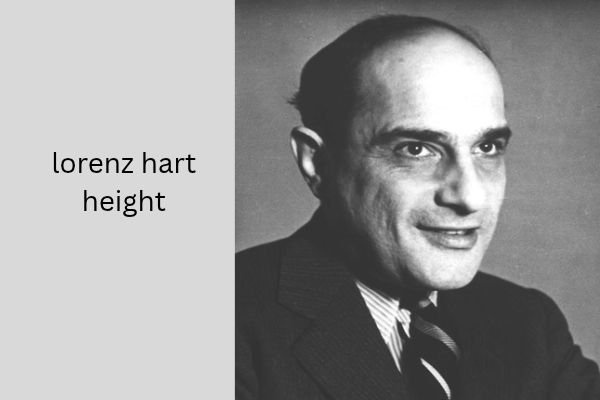
Lorenz Hart height is 5 feet 0 inches (152 cm).
The legendary Broadway lyricist behind “My Funny Valentine” and “Blue Moon” was famously small, with some accounts placing him a touch under five feet. Most biographies and contemporaries describe him as roughly five feet tall, and this is the most commonly cited figure.
Lorenz Hart Quick Facts
| Attribute | Detail |
|---|---|
| Full Name | Lorenz Milton Hart |
| Height | 5 ft 0 in (152 cm), approximate |
| Weight | Not reliably documented |
| Date of Birth | May 2, 1895 |
| Age | Died at 48 (born 1895, died 1943; he would be 131 today) |
| Birthplace | New York City, New York, USA |
| Nationality | American |
| Zodiac Sign | Taurus |
| Profession | Lyricist, Broadway and film songwriter |
| Shoe Size | Not documented |
Early Life and Background
Lorenz Hart was born on May 2, 1895, in Harlem, New York City, the elder son of Max and Frieda Hart. His father was a businessman who worked as a promoter and deal-maker, and his mother was a devoted, theatrical woman who encouraged her sons’ interest in the arts. His younger brother, Theodore “Teddy” Hart, later became a Broadway comic actor and appeared in several shows his brother helped write.
Hart grew up in a household where literature, music and the theater were part of daily life. He read widely as a boy, devouring poetry and the plays of Shakespeare, and developed an early fascination with German and English verse. He translated German plays and operettas as a young man, an exercise that sharpened his ear for rhyme and meter.
He attended Columbia University to study journalism, where he contributed to the Columbia Varsity Show, the school’s annual musical. He left without completing his degree, but the experience introduced him to the world of amateur and professional theater. He took work translating German-language shows for the Shubert organization, a job that gave him practical training in adapting lyrics to existing melodies.
In 1919, a mutual friend introduced the 23-year-old Hart to a teenage composer named Richard Rodgers. By Rodgers’ own later account, the two connected almost instantly over their shared love of musical theater and spent an entire afternoon talking. That meeting launched one of the most celebrated partnerships in American songwriting history.
Career Journey and Timeline
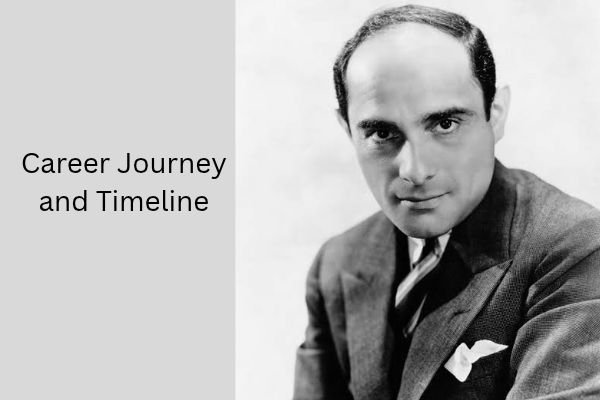
1919-1924: The Early Struggles. After meeting Rodgers, Hart began collaborating on amateur and small-scale productions. Their first professional break came with the 1920 show Poor Little Ritz Girl, but the real breakthrough was slow in coming. For several years the pair wrote songs that few producers wanted.
1925: The Garrick Gaieties. The duo’s fortunes changed with this intimate revue, which featured the song “Manhattan.” The show was a hit, and the song became a signature number. That same year they also scored Dearest Enemy.
1927-1931: Broadway Hits. A Connecticut Yankee (1927) produced “Thou Swell” and “My Heart Stays with Me” and cemented their reputation. Other shows from this period included Present Arms and Spring Is Here, along with the rest of their growing catalog.
1930s: Hollywood and Back. Like many Broadway writers, Rodgers and Hart went to Hollywood. Their work on Love Me Tonight (1932) produced “Isn’t It Romantic?” and “Lover.” Hart, however, disliked the film capital and eventually returned to New York.
1935-1938: The Golden Run. Jumbo (1935) gave the world “My Romance.” On Your Toes (1936) brought “There’s a Small Hotel.” Babes in Arms (1937) was packed with standards, including “My Funny Valentine,” “The Lady Is a Tramp” and “Where or When.” The Boys from Syracuse (1938), based on Shakespeare’s The Comedy of Errors, added “Falling in Love with Love” and “This Can’t Be Love.”
1940: Pal Joey. This daring musical featured a cynical anti-hero and songs like “Bewitched, Bothered and Bewildered.” It was ahead of its time and became a landmark of the American musical.
1942-1943: The Final Years. Hart’s health and reliability declined, and Rodgers began working with Oscar Hammerstein II on Oklahoma!, which opened in March 1943. Hart contributed to a revival of A Connecticut Yankee later that year, writing the new song “To Keep My Love Alive.” He fell ill with pneumonia soon after opening night and died on November 22, 1943, at age 48.
Physical Appearance in Detail
Lorenz Hart was strikingly small, even by the standards of his era. Standing around five feet tall, he was described by friends and colleagues as slight, compact and quick-moving. Contemporary accounts frequently noted that he stood noticeably shorter than most of the men he worked alongside.
His build was slender in youth and became heavier and softer in later years, a change associated with his lifestyle and declining health. He had a large head relative to his frame, which, together with his short stature, gave him a distinctive silhouette that cartoonists and friends often remarked upon.
He had dark hair that thinned over time and dark, expressive eyes. Photographs from the 1920s and 1930s show a man with an animated, intelligent face, often caught mid-conversation. He was known for restless energy, a nervous habit of pacing, and a rapid, witty way of speaking.
His style was practical rather than flashy. He typically wore conventional suits of the period, though accounts suggest he was not especially fastidious about his appearance. Friends recalled that he often looked rumpled, particularly when he was deep in work, which he was famous for doing at odd hours and in unusual places.
Height Comparison: Hart vs. Other Songwriters
Hart’s stature stood out even among his peers. Next to his creative partner and the other great lyricists of the day, he appeared remarkably small. The figures below are approximate, since heights for historical figures were rarely recorded precisely and sources sometimes vary.
| Figure | Profession | Approximate Height |
|---|---|---|
| Lorenz Hart | Lyricist | 5 ft 0 in (152 cm) |
| Richard Rodgers | Composer | 5 ft 8 in (173 cm) |
| Oscar Hammerstein II | Lyricist | 6 ft 3 in (191 cm) |
| Cole Porter | Composer-lyricist | 5 ft 7 in (170 cm) |
| Irving Berlin | Composer-lyricist | 5 ft 6 in (168 cm) |
The contrast with Hammerstein is the most dramatic, a gap of roughly a foot and a quarter. Even next to Berlin and Porter, who were themselves not tall men, Hart was visibly shorter. Standing beside Rodgers, he was reportedly several inches shorter, a difference friends noticed whenever the two appeared together.
How Height Shaped His Career and Public Image

In an industry built on charisma and presence, Hart’s short stature never stopped him from working at the highest level. A lyricist’s craft is done at a desk, not on a stage, and his talent lived entirely on the page. His height was irrelevant to the quality of his rhymes, his wit, and his emotional insight.
Still, it contributed to the way people saw and remembered him. Colleagues and biographers frequently mentioned his size, and it became part of the mythology around him. He was often described in affectionate terms as an impish, elfin figure, a tiny man with an enormous talent. That image fit his personality, which combined playfulness, sharp humor and a deep underlying melancholy.
Many writers have connected the poignant, self-questioning quality of his lyrics to his private sense of being an outsider. Songs like “Bewitched, Bothered and Bewildered” and “My Funny Valentine” explore vulnerability, insecurity and unrequited longing with a candor unusual for popular songs of the period. It would be too simple to attribute this to height alone, since Hart also lived with the pressures of being a gay man in an era when that could not be spoken of openly. Together, these experiences shaped a worldview that came through in his work.
His size also shaped his legacy in popular culture. When filmmakers later portrayed him, his height became a central challenge. Mickey Rooney, himself short, played Hart in the 1948 film Words and Music. More recently, the 2025 film Blue Moon cast the much taller Ethan Hawke in the role and used filmmaking techniques to make him appear closer to Hart’s real size, which showed how essential the detail was to capturing the character.
What He Said About His Height
There are few well-documented interviews in which Hart discussed his height in his own words. Unlike modern celebrities, he did not give extended press interviews about his appearance, and much of what survives comes from the recollections of friends, family and collaborators rather than direct quotes.
What accounts do suggest is that Hart handled the subject with humor and a degree of self-deprecation. His friends described a man who joked about himself before anyone else could, a common coping tactic for people who feel self-conscious. Rodgers, in his memoirs, wrote with affection about Hart’s tiny size and vivid personality, treating it as part of what made him unforgettable.
Because these recollections are secondhand and sometimes embellished, it is wise to treat any specific “quote” attributed to Hart about his height with caution. The consistent theme is not a particular line but an attitude: wry, witty and a little wistful.
Personal Life
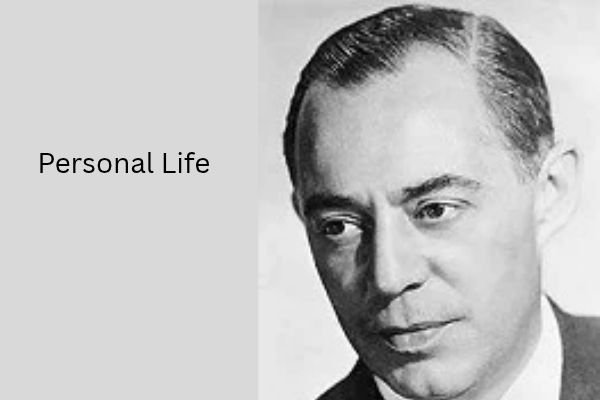
Hart never married and lived for most of his adult life with his mother, Frieda, with whom he was extremely close. Her death in early 1943 devastated him and is widely believed to have contributed to his rapid decline that year.
Hart was gay, though he never publicly discussed it, as was typical for the time. Biographers have described a private life marked by loneliness, and many see echoes of this in the longing that runs through his lyrics. He also struggled with alcohol, and his drinking increasingly affected his reliability in the years before his death.
His working relationship with Rodgers was both enormously productive and, at times, strained. Rodgers was disciplined and punctual, while Hart was erratic and prone to vanishing for days. Despite the friction, the two remained deeply connected, and Rodgers always spoke of Hart’s talent with great respect.
Hart died on November 22, 1943, just days after the opening of the A Connecticut Yankee revival. He was 48. Rodgers and Hammerstein went on to define the next era of the American musical, but Hart’s songs remain among the most performed and recorded in the Great American Songbook.
Frequently Asked Questions
Was Lorenz Hart tall for a man?
No. At about 5 feet 0 inches, Hart was well below the average height for American men of his era, which was roughly 5 feet 7 inches.
What is Lorenz Hart’s exact height in cm?
Approximately 152 cm. Since records from the early twentieth century are imprecise, some sources give slightly lower figures, but 152 cm is the most commonly cited number.
How does Lorenz Hart’s height compare to Richard Rodgers?
Rodgers was generally cited at around 5 feet 8 inches, which would make him roughly eight inches taller than Hart. Friends often remarked on the visible gap between the two.
Has Lorenz Hart talked about his height publicly?
Not extensively. There are few documented interviews on the subject, and most surviving descriptions come from friends and collaborators who recalled his humor about his size.
What is Lorenz Hart’s shoe size?
His shoe size is not documented in reliable sources.
Is Lorenz Hart taller than Irving Berlin?
No. Berlin is usually cited at about 5 feet 6 inches, so he stood roughly half a foot taller than Hart.
Did Lorenz Hart height affect his work as a lyricist?
Not in any practical sense. Writing lyrics required no particular physical attributes, and his talent was never limited by his size. Many biographers do argue that his experience as an outsider informed the emotional honesty of his songs.
What is the Lorenz Hart height according to most sources?
Most biographical sources give the Lorenz Hart height as about 5 feet 0 inches (152 cm), though a few suggest he may have been slightly shorter.
What is Lorenz Hart known for besides his height?
He is known as the lyricist half of Rodgers and Hart, responsible for classics including “My Funny Valentine,” “The Lady Is a Tramp,” “Blue Moon,” “Bewitched, Bothered and Bewildered” and “Manhattan.” His clever internal rhymes and emotionally complex lyrics reshaped American popular song.
