

Doug Flutie Height: How Tall Is He Really?
Doug Flutie height is 5 feet 10 inches (178 cm).
That is the figure most commonly cited for the Heisman-winning quarterback, though some rosters and profiles list him closer to 5 feet 9.5 inches. Either way, Flutie stood well below the 6-foot-3 prototype that NFL scouts favored throughout his career, and he spent two decades proving that the number on the measuring tape was the least important statistic about him.
Quick Facts
| Attribute | Detail |
|---|---|
| Full Name | Douglas Richard Flutie |
| Height | 5 ft 10 in (178 cm), approximate; some sources list 5 ft 9.5 in |
| Weight | About 180 lb (82 kg) during his playing career |
| Date of Birth | October 23, 1962 |
| Age | 63 (turns 64 on October 23, 2026) |
| Birthplace | Manchester, Maryland, USA |
| Nationality | American |
| Zodiac Sign | Scorpio |
| Profession | Former professional football quarterback, broadcaster, and philanthropist |
| Shoe Size | Not publicly confirmed |
Early Life and Background
Doug Flutie was born in Manchester, Maryland, and grew up in Natick, Massachusetts, a suburb west of Boston. His father, Richard, worked in the insurance business, and his mother, Joan, raised a family of athletic kids. Football ran through the household. His younger brother Darren became a standout receiver who also played in the CFL and NFL, and his older brother Bill played college football as well.
At Natick High School, Flutie played quarterback and showed the improvisational style that would define his career. Even then, his size was a talking point. Recruiters from major programs largely passed on him because they didn’t see a quarterback who could see over a defensive line. Most programs wanted height and arm strength, and Flutie offered neither on paper.
Boston College was the exception. Head coach Jack Bicknell offered a scholarship, and Flutie enrolled in 1981 in the Eagles’ program, which was a modest football power at the time. He would change that. By his senior season he was one of the most famous college athletes in the country, and the school’s football profile has never been the same since.
Career Journey and Timeline

1981-1984, Boston College. Flutie grew steadily as a passer and scrambler, breaking school and conference records. In 1984 he won the Heisman Trophy, along with the Maxwell Award and Walter Camp Award, as the nation’s top player.
November 23, 1984. In a high-scoring game against defending national champion Miami, Flutie threw a desperation touchdown pass on the final play to win the game. It became known as the “Hail Flutie” pass and remains one of the most replayed moments in college football history.
1985-1986, early pro struggles. The Los Angeles Rams selected him in the 11th round of the 1985 NFL Draft, but he signed with the New Jersey Generals of the USFL. After the league folded, he moved to the NFL and played for the Chicago Bears and then the New England Patriots through 1989, with limited starting time.
1990-1997, CFL stardom. Frustrated by NFL skepticism, Flutie went north. He played for the BC Lions, Calgary Stampeders, and Toronto Argonauts, winning three Grey Cup championships and six CFL Most Outstanding Player awards. His passing numbers in Canada were extraordinary and made him one of the best players in league history.
1998-2000, return to the NFL. The Buffalo Bills signed him, and he earned a Pro Bowl selection and Comeback Player of the Year honors in his first season back. His time in Buffalo included a memorable playoff-race stretch and a controversial benching in the 1999 playoffs.
2001-2005, Chargers and Patriots. Flutie played for the San Diego Chargers for several seasons before rejoining New England in 2005.
January 1, 2006. In his final NFL game, Flutie converted a dropkick extra point, the first in the NFL since 1941. It was a perfect, playful bookend to a career built on doing the unexpected.
Physical Appearance in Detail
Flutie’s measurements tell part of his story. At roughly 5 feet 10 inches and around 180 pounds, he had a compact, athletic frame built around quickness and balance rather than raw power. His low center of gravity helped him slip tackles and change direction in the pocket, and his wide-shouldered, sturdy build allowed him to absorb hits during a career that lasted well into his 40s.
He has dark hair, which has turned gray in recent years, and a friendly, expressive face that made him a natural in broadcasting and commercials. His eyes are brown.
Flutie’s on-field “style” was less about fashion and more about energy. He was known for his scrambling, his sidearm and off-balance throws, and a confident, almost cheerful demeanor even in high-pressure moments. Off the field he has generally favored a clean-cut, casual look, often seen in team apparel or business-casual outfits during his television work.
Height Comparison
Doug Flutie height is notable mostly because of the era in which he played. NFL teams in the 1980s and 1990s heavily favored tall, pocket-passing quarterbacks, and anyone under 6 feet was viewed as a long shot. Flutie sits several inches below the typical starting quarterback of his time, and even in today’s more athletic, mobility-friendly league he would be among the shortest starters.
The table below compares Flutie with other well-known quarterbacks. Listed heights vary by source and are approximate.
| Quarterback | Listed Height |
|---|---|
| Doug Flutie | 5 ft 10 in (178 cm) |
| Kyler Murray | 5 ft 10 in (178 cm) |
| Russell Wilson | 5 ft 11 in (180 cm) |
| Drew Brees | 6 ft 0 in (183 cm) |
| Baker Mayfield | 6 ft 1 in (185 cm) |
| Tom Brady | 6 ft 4 in (193 cm) |
Flutie matches Kyler Murray and is an inch shorter than Russell Wilson, two modern players often cited as proof that shorter quarterbacks can succeed. Against Brady, he gave up about six inches. Brees, who became a Super Bowl champion at around 6 feet, is frequently mentioned as another success story for undersized passers, and Flutie’s career helped open the door for those evaluations.
How Height Shaped His Career and Public Image
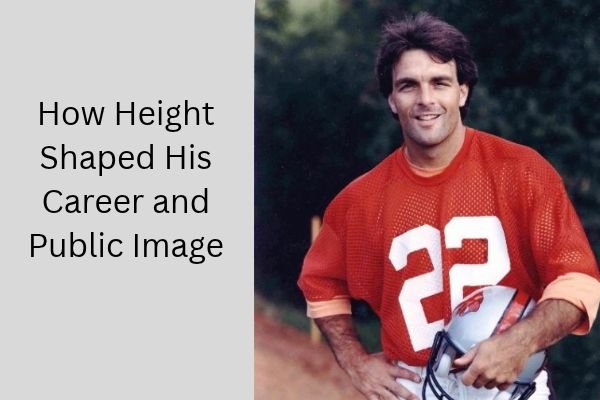
Few athletes have had their height define their narrative as much as Flutie. It influenced nearly every major decision in his professional life, from being passed over by top college programs to falling to the 11th round of the draft despite winning the Heisman.
Scouts in the 1980s argued that a shorter quarterback couldn’t see receivers over a wall of linemen and would struggle to get passes over them. Flutie countered by using his mobility, rolling out of the pocket to create passing lanes and extend plays. That style turned a perceived weakness into a strength, and it made him unusually effective in the wide, fast-moving Canadian game, where quarterbacks need to move around and throw on the run.
His size also shaped his public image. Flutie became a symbol of the underdog, the player who succeeded in spite of doubt. That identity helped him build a loyal fan base in Boston, Buffalo, San Diego, and across Canada. It also brought endorsement deals, media appearances, and a popular cereal brand, Flutie Flakes, which raised money for his foundation.
Perhaps most importantly, his career helped change how teams evaluate quarterbacks. Today’s league is far more open to shorter passers who bring mobility and accuracy, and Flutie is often credited as one of the early examples that made that shift possible.
What He Has Said About His Height
Flutie has addressed his height many times over the years, generally with humor and a matter-of-fact attitude. In interviews, he has described being told repeatedly that he was too short to play quarterback at the highest level, and he has said that criticism fueled his motivation rather than discouraging him.
He has also pointed out that being shorter forced him to develop other skills, such as footwork, anticipation, and the ability to find throwing windows other quarterbacks might not need. He has often joked about the endless “too short” commentary and noted that his production in the CFL and NFL answered most of it.
In media appearances he has spoken fondly of the new generation of smaller quarterbacks, saying he’s glad teams now judge players on ability instead of inches. These remarks are paraphrased from his general public comments, and they reflect a consistent message: height was a label others put on him, not a limit he accepted.
Personal Life
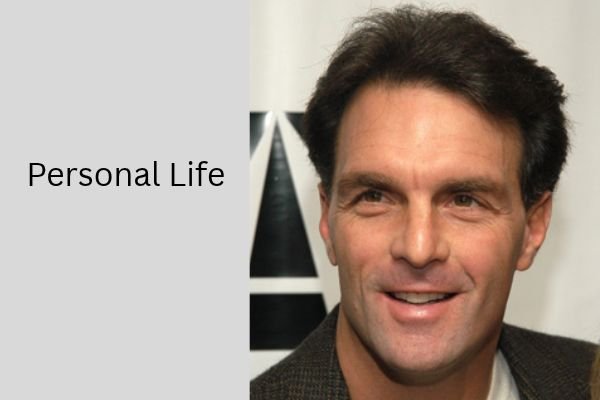
Doug Flutie is married to Laurie Flutie, and the couple has two children, Alexa and Doug Jr. Doug Jr. was diagnosed with autism at a young age, which led the family to found the Doug Flutie Jr. Foundation for Autism in 1998. The foundation has raised millions of dollars to support individuals and families affected by autism and has become a central part of Flutie’s life and public work.
After retiring from the NFL, Flutie worked as a college football analyst for NBC Sports and other networks, bringing his quarterback insight to broadcasts. He has also remained active in charity events, golf tournaments, and speaking engagements. His brother Darren and the rest of the Flutie family remain closely connected to the Massachusetts area.
Flutie has been inducted into both the College Football Hall of Fame and the Canadian Football Hall of Fame, honors that cap a career defined by overcoming expectations.
FAQ
Is Doug Flutie tall for a man?
Not especially. At 5 feet 10 inches, he is close to average for an adult American man, whose average height is roughly 5 feet 9 inches. For an NFL quarterback, however, he is considered short.
What is Doug Flutie’s exact height in cm?
About 178 cm. The conversion of 5 feet 10 inches comes to roughly 177.8 cm, and some sources list him slightly shorter, near 176 cm.
How does Doug Flutie’s height compare to Drew Brees?
Brees is listed at 6 feet 0 inches, about two inches taller than Flutie. Both are often cited as proof that shorter quarterbacks can thrive.
Has Doug Flutie talked about his height publicly?
Yes. He has discussed it in many interviews, generally with humor, noting that it shaped how teams viewed him and pushed him to rely on mobility and instincts.
What is Doug Flutie’s shoe size?
His shoe size has not been publicly confirmed by reliable sources. Given his height and build, it would likely fall within the typical range for a man of his size, but that is an estimate rather than a verified figure.
Is Doug Flutie taller than Kyler Murray?
No, they are listed at the same height, 5 feet 10 inches. Murray is often compared with Flutie as another quarterback who defied height expectations.
Does Doug Flutie’s height affect his playing style?
It shaped it significantly. Because he couldn’t rely on height to see over linemen, Flutie developed a game built on scrambling, throwing on the move, and creating passing lanes. That approach became his trademark.
Is Doug Flutie taller than Russell Wilson?
No. Wilson is listed at 5 feet 11 inches, one inch taller than Flutie. Both are frequently mentioned in discussions about undersized quarterbacks.
What is Doug Flutie known for besides his height?
He is best known for the “Hail Flutie” pass in 1984, winning the Heisman Trophy, his CFL dominance, his Pro Bowl comeback with the Bills, the last NFL dropkick since 1941, and his autism advocacy through the Doug Flutie Jr. Foundation.
Why is Doug Flutie height such a common search?
Because his career is one of football’s best underdog stories. Fans want to know just how short he was compared with the players he outperformed, and the answer, about 5 feet 10 inches, makes his achievements even more impressive.
