
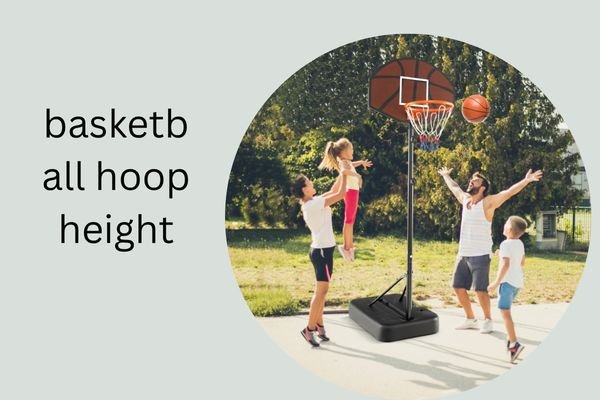
Basketball Hoop Height: Quick Answer
Basketball hoop height is 10 feet (3.05 meters). This is the standard height measured from the playing surface to the top of the rim and is used in professional basketball, including NBA and FIBA competition, as well as most high school and adult games. Youth basketball can use lower rims, depending on the player’s age and league rules. The 10-foot standard has remained one of the defining measurements of the modern basketball court.
Quick Facts
| Attribute | Detail |
|---|---|
| Standard Rim Height | 10 feet |
| Height in Meters | 3.05 meters |
| Height in Centimeters | 305 cm |
| Height in Inches | 120 inches |
| Rim Diameter | 18 inches (45.7 cm) |
| Backboard Size | Commonly 72 × 42 inches in professional play |
| Rim Shape | Circular |
| Standard Use | Professional, college, high school and adult basketball |
| Youth Height | Commonly 8–9 feet, depending on league |
| Measurement Point | Playing surface to top of rim |
Early History & Background

Basketball was invented by Dr. James Naismith in 1891 in Springfield, Massachusetts. The original game was created as an indoor winter activity for students, and the first basketball baskets were peach baskets attached to the balcony of a gymnasium.
Interestingly, the original basket was positioned approximately 10 feet above the floor. The height was not established after extensive athletic testing or a detailed engineering study. Instead, the balcony rail where Naismith placed the basket happened to be about 10 feet high.
That measurement eventually became the standard for basketball.
As the sport developed, the peach baskets were replaced by metal rims and backboards. The rules became more organized, courts became standardized, and competitive leagues adopted consistent equipment dimensions. Yet the original approximately 10-foot basket height survived.
Today, the standard 10-foot rim provides a common target for players around the world. Whether someone is playing professional basketball, college basketball, high school basketball, or an adult recreational game, a regulation hoop is generally positioned 10 feet above the floor.
The continued use of this measurement is one of the strongest links between modern basketball and the game’s original design.
Basketball Hoop Height: Career Journey and Timeline
Rather than being associated with one individual, the standard basketball hoop height developed alongside the sport itself.
1891: Basketball Is Invented
James Naismith developed basketball at the International YMCA Training School in Springfield. He needed an indoor activity that could keep students active while reducing the physical contact associated with some outdoor sports.
The first baskets were peach baskets, and they were placed approximately 10 feet above the gymnasium floor.
1890s: The Basic Concept Spreads
Basketball quickly expanded beyond its original setting. Schools, colleges and YMCA organizations began playing the game. As participation increased, rules and equipment gradually became more consistent.
The elevated basket became a central feature of the game because players had to throw the ball upward into a relatively small target.
Early 1900s: Backboards Become Important
Early basketball baskets were sometimes positioned against balconies or other structures. Backboards eventually became an important part of the equipment because they helped keep the ball from leaving the playing area and introduced another strategic element.
The rim remained approximately 10 feet above the floor.
1940s–1950s: Professional Basketball Develops
Professional basketball became increasingly organized in the United States. The formation and growth of major professional leagues helped establish consistent court and equipment standards.
The 10-foot basket became an essential part of organized competitive basketball.
1949: NBA Formation
The National Basketball Association was formed in 1949 following the merger of the Basketball Association of America and the National Basketball League.
As professional basketball became more prominent, standardized court dimensions and equipment became increasingly important.
Modern Era
Today, the 10-foot rim is recognized worldwide as the regulation standard for adult competitive basketball. International competitions governed by FIBA use the same 3.05-meter rim height, while major professional leagues such as the NBA also use a 10-foot basket.
The measurement has therefore remained remarkably consistent for more than a century.
Physical Appearance and Dimensions in Detail
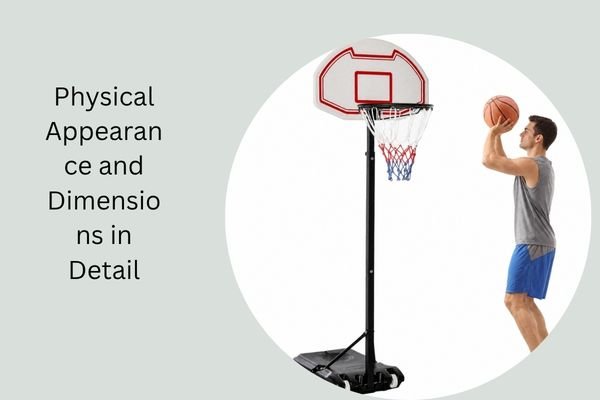
A basketball hoop is more than simply a rim attached to a backboard. The complete basketball goal consists of several components designed around the 10-foot target.
The rim itself is 10 feet above the playing surface in standard basketball. This measurement is taken vertically from the floor or court surface to the top edge of the rim.
The rim has an inside diameter of 18 inches, or approximately 45.7 centimeters. It is designed to allow a regulation basketball to pass through while still providing a challenging target.
The backboard is positioned behind the rim. In professional basketball, a commonly used backboard measures approximately 72 inches wide by 42 inches high. The backboard provides a surface from which players can intentionally bank shots toward the basket.
Modern rims are generally made from strong metal and include a net. Competitive equipment is designed to withstand repeated shots, rebounds and, where permitted, player contact with the rim.
The entire goal is supported by a structure that must remain stable during play. In professional arenas, the basket is commonly mounted on a substantial support system extending behind the backboard.
Height Comparison With Other Basketball Figures
The 10-foot rim creates an interesting comparison with basketball players. Most players are considerably shorter than the basket, meaning even the tallest athletes must jump or extend their arms to reach the rim.
| Figure or Measurement | Height |
|---|---|
| Standard Basketball Rim | 10 ft (3.05 m) |
| Michael Jordan | 6 ft 6 in (1.98 m) |
| LeBron James | 6 ft 9 in (2.06 m) |
| Stephen Curry | 6 ft 2 in (1.88 m) |
| Shaquille O’Neal | 7 ft 1 in (2.16 m) |
| Average 10-Foot Hoop Difference | Varies by player |
The comparison demonstrates why vertical jumping and arm length matter so much in basketball. A player does not need to be 10 feet tall to dunk because the athlete’s standing reach and vertical leap combine to determine how high the hands can reach.
A player who is 6 feet tall, for example, may still be capable of reaching above the rim with enough jumping ability.
How Height Shapes Basketball Performance and Public Image
The 10-foot basket has a major influence on the way basketball is played. Every offensive shot, layup, dunk and rebound is ultimately related to the height of the rim.
For shooting, players must develop a repeatable release angle and enough force to send the ball toward a target that is more than 3 meters above the floor. The distance and elevation of the basket influence shooting mechanics, especially for younger players.
For taller players, the regulation rim can create natural advantages around the basket. Height can make it easier to contest shots, collect rebounds and finish close-range attempts. However, height alone does not guarantee success.
A shorter player can compensate through speed, ball handling, positioning, shooting accuracy and jumping ability. This is one reason basketball features successful athletes across a wide range of body types.
The 10-foot rim also contributes significantly to basketball’s visual identity. Dunks are dramatic partly because the player must elevate high enough to bring the ball above a regulation rim.
At the professional level, players who can comfortably reach the rim can produce spectacular plays. Powerful dunks, blocks and alley-oops have become some of the most recognizable moments in basketball.
For younger players, lowering the rim can make the game more accessible. It allows developing athletes to learn shooting and finishing techniques without requiring the physical abilities necessary to reach a full-size 10-foot basket.
What Has Been Said About Basketball Hoop Height?

The most famous historical anecdote concerning the height of a basketball hoop involves James Naismith and the original peach baskets.
When Naismith created basketball, he reportedly used a basket attached about 10 feet above the floor. The height was essentially a consequence of the available gymnasium structure rather than a carefully calculated sports-science measurement.
That accidental choice became one of the sport’s most enduring standards.
Modern basketball organizations have continued to use the same basic height because it provides a challenging but achievable target for adult players. The consistency also allows players, coaches and officials to develop a universal understanding of the game.
Instead of changing the rim height according to individual players, competitive basketball generally keeps the basket at the same regulation height. Players adapt their skills to the fixed target.
For youth programs, however, coaches and leagues may choose lower baskets. This allows children to develop proper shooting mechanics and enjoy competitive play before progressing to the full regulation height.
Personal and Recreational Use
For home basketball systems, choosing the correct hoop height depends on who will be using the basket.
Adults who want to practice regulation basketball should generally set the rim at 10 feet. This allows shooting, rebounding and dunking practice to closely resemble competitive play.
Children may benefit from a lower setting. Adjustable basketball hoops can often be lowered to accommodate younger players before gradually being raised as their strength and technique improve.
For casual family play, there is no requirement to use a 10-foot basket unless the goal is to replicate regulation conditions. A lower basket can make the game more accessible to beginners.
Installation also matters. The playing surface should be level, and the support structure should be securely installed. Outdoor hoops should be positioned with enough clearance around the backboard and rim for safe movement.
The important point is that basketball hoop height for regulation adult play remains 10 feet, while recreational and youth basketball can reasonably use different heights.
FAQ: Basketball Hoop Height
1. Is a basketball hoop 10 feet tall?
Yes. A standard regulation basketball rim is 10 feet (3.05 meters) above the playing surface.
2. What is basketball hoop height in centimeters?
The standard basketball hoop height is 305 centimeters from the court surface to the top of the rim.
3. How high is an NBA basketball hoop?
An NBA basketball hoop is 10 feet (3.05 meters) high. The NBA uses the regulation 10-foot rim height for its games.
4. How does the height compare with an NBA player?
Even tall NBA players are generally shorter than the 10-foot rim. For example, a 7-foot player is still approximately 3 feet shorter than the top of the basket.
5. Has basketball hoop height always been 10 feet?
The approximately 10-foot height dates back to the invention of basketball. James Naismith originally used baskets positioned about 10 feet above the floor, and the measurement became standardized as the sport developed.
6. What is the basketball hoop height for children?
Youth basketball does not always use a 10-foot basket. Depending on age and league rules, younger players may use rims around 8 or 9 feet high.
7. Can a basketball hoop be lower than 10 feet?
Yes. Adjustable basketball systems can be lowered for children, beginners and training purposes. A 10-foot rim is the standard for regulation adult basketball.
8. Does hoop height affect shooting?
Yes. The height of the target affects shooting mechanics, release angle and required force. Players must develop technique that consistently sends the ball toward the elevated rim.
9. Why is a basketball hoop 10 feet high?
The original basket used by James Naismith was placed approximately 10 feet above the gym floor, reportedly because of the existing balcony structure. That height eventually became the standard.
10. What is basketball known for besides its 10-foot hoop?
Basketball is known for dribbling, passing, shooting, rebounding, defense, fast breaks, three-point shots and spectacular plays such as slam dunks and blocks.
Final Answer
The standard basketball hoop height is 10 feet (3.05 meters). This measurement applies to professional and most organized adult basketball, including NBA and international competition. Youth basketball can use lower rims to match players’ ages and abilities.
The 10-foot standard has a fascinating connection to basketball’s origins: James Naismith’s first baskets were positioned at approximately that height, and the measurement remained as the sport evolved from a simple indoor gym activity into a global sport.
