

Alexander the Great Height:
Alexander the Great height is about 5 feet 6 inches (168 cm). No ancient writer recorded an exact measurement, so this is a widely cited modern estimate based on descriptions of a compact, muscular man who looked shorter than many of his companions. Most historians place him between 5 ft 4 in and 5 ft 7 in. Despite his modest stature, he became one of the most commanding figures in history.
Quick Facts
| Attribute | Detail |
|---|---|
| Full Name | Alexander III of Macedon |
| Height | About 5 ft 6 in (168 cm), approximate; estimates range from 163 to 170 cm |
| Weight | Not recorded; estimated 65-70 kg (143-154 lb) |
| Date of Birth | July 356 BC (traditionally 20 or 21 July) |
| Age | Died at 32 (born over 2,380 years ago) |
| Birthplace | Pella, Kingdom of Macedon |
| Nationality | Macedonian (ancient Greek) |
| Zodiac Sign | Cancer (by the traditional birth date) |
| Profession | King of Macedon, military commander, conqueror |
| Shoe Size | Not recorded |
Early Life & Background
Alexander was born in 356 BC in Pella, the Macedonian capital, to King Philip II and Olympias, a princess of Epirus. Plutarch tells of a boy of 12 or 13 who tamed the wild horse Bucephalus by turning it toward the sun so it would not fear its own shadow. The horse stayed with him for most of his campaigns.
Around 343 BC, Philip hired Aristotle to tutor his son at Mieza, a retreat with a sanctuary of the Nymphs. Alexander studied philosophy, medicine, and literature alongside the sons of Macedonian nobles, including Hephaestion, Ptolemy, and Cassander. These companions became his closest friends and later his generals. He reportedly kept an annotated copy of the Iliad, which Aristotle prepared for him, and he admired Achilles as an ancestor and model.
At 16 he governed Macedon as regent while Philip campaigned against Byzantium, and he crushed a rebellion by the Maedi. At 18 he commanded the cavalry wing at Chaeronea in 338 BC, where Macedon defeated Thebes and Athens. Relations with Philip then soured over the king’s new marriage. In 336 BC, Philip was assassinated, and a 20-year-old Alexander inherited a kingdom and an army.
Career Journey & Timeline

336-335 BC: Alexander secured the throne, executed rivals, and marched south to confirm Macedonian control over Greece. He campaigned along the Danube, and when Thebes revolted, he destroyed the city.
334 BC: He crossed the Hellespont into Asia with about 40,000 troops and defeated Persian satraps at the Granicus River, where he nearly died in the cavalry charge.
333 BC: At Issus, he routed the army of Darius III, who fled and left his family behind.
332 BC: After a seven-month siege, Alexander took the island city of Tyre and then entered Egypt, where he was welcomed as a liberator. He founded Alexandria in 331 BC and visited the oracle of Ammon at Siwa.
331 BC: At Gaugamela, he defeated a much larger Persian force, which opened Babylon and Susa to him.
330 BC: He burned the palace at Persepolis. Darius was murdered by his own satrap Bessus, and Alexander pursued Bessus eastward.
329-327 BC: He fought a grueling guerrilla war in Bactria and Sogdiana and married Roxana, a Bactrian noblewoman.
326 BC: At the Hydaspes River, he defeated the Indian king Porus in his last great pitched battle. His exhausted army refused to go farther at the Hyphasis River, forcing him to turn back.
325-324 BC: The return march through the Gedrosian desert cost many lives. At Susa he held mass weddings to unite Macedonian and Persian elites, and his troops mutinied at Opis over his adoption of Persian customs.
323 BC: Alexander died in Babylon in June, aged 32, after a short illness. Typhoid, malaria, and poisoning are among the causes proposed, and none is certain. His empire stretched from Greece to northwestern India and was soon divided among his generals.
Physical Appearance in Detail
Ancient descriptions give a consistent picture. Alexander was compact and athletic, with a runner’s speed and a soldier’s endurance. Plutarch says he had fair skin with a ruddy tint on his face and chest. Later writers noted that his neck tilted slightly to the left, and the sculptor Lysippus, who was one of the few artists Alexander allowed to portray him, reproduced that tilt along with his moist, intense gaze.
His hair was thick and swept up from the forehead, a style often called leonine. Unlike earlier Greek men, he went clean-shaven, a habit that spread across the Hellenistic world. The Alexander Romance, a later legendary account, says his eyes were different colors, one dark and one light, but this is almost certainly embellishment rather than fact.
Alexander’s body carried the marks of constant combat. He was wounded by an arrow in the shoulder, struck on the head and neck, and nearly killed by an arrow that pierced his lung while storming a city of the Malli in India. In the field he wore a Macedonian cloak, a helmet, and a linen cuirass. Later in his reign he adopted elements of Persian court dress, including a diadem, which unsettled many of his Macedonian officers.
Alexander the Great Height Compared to Other Famous Leaders
Because Alexander’s skeleton has never been found, comparisons rely on written descriptions and on measurements of other historical figures, most of which are also approximate. Alexander appears to have been about average for a man of his era, which is estimated at roughly 5 ft 5 in to 5 ft 7 in in the ancient Mediterranean. His companions were often taller. The Persian queen mother Sisygambis once mistook Hephaestion for Alexander when she entered their tent, because Hephaestion was the taller and more imposing man.
| Figure | Era | Approximate Height |
|---|---|---|
| Alexander the Great | 356-323 BC | 5 ft 6 in (168 cm) |
| Napoleon Bonaparte | 1769-1821 | 5 ft 6 in to 5 ft 7 in (168-170 cm) |
| Julius Caesar | 100-44 BC | 5 ft 9 in (175 cm) |
| Augustus | 63 BC-14 AD | 5 ft 7 in (170 cm) |
| Charlemagne | c. 748-814 | 6 ft 0 in (184 cm) |
Alexander and Napoleon, often compared as the two great conquerors, were almost identical in height. All of these figures are approximate.
How Height Shaped His Career & Public Image

Alexander’s height mattered less than his visibility. Macedonian kings led from the front, wearing distinctive armor and often in the thick of cavalry charges, so he had to be recognizable at a glance. Ancient writers describe a white-plumed helmet and bright armor, details that made his small frame easy to find. That visibility inspired his troops, but it also drew enemy fire, which explains the many wounds he suffered.
His stature also shaped how he was portrayed. Lysippus and other artists emphasized his face, hair, and posture rather than his size, a style that projected energy and divine confidence. The later image of an imposing hero owes much to sculpture, coinage, and legend, which grew his stature along with his fame.
Standing among taller companions also pushed Alexander to build his authority in other ways. He cultivated claims of descent from Heracles and Achilles, accepted the title of son of Ammon in Egypt, and displayed extraordinary personal courage. His stature became part of his legend, a reminder that his authority came from his deeds, speed, and presence rather than size. Compact, fast, and fearless, he was well suited to the cavalry charges that decided his greatest battles.
What He Said About His Height
Alexander left no recorded statement about his own stature, and no ancient source quotes him on the subject. The closest anecdote comes from the aftermath of Issus. When Sisygambis bowed to Hephaestion by mistake, she was mortified once she realized her error. Alexander is said to have reassured her that she had not erred, because Hephaestion, too, was Alexander. The story, told by Arrian, Curtius, and Diodorus in slightly different forms, shows him treating the confusion as a compliment to his friend rather than a slight to himself.
Another story, from Plutarch, shows his attitude toward physical contests. Asked whether he would run in the Olympic footrace, since he was a fast runner, he said he would if his competitors were kings. The remark suggests he valued rank and ambition over physical measurements. Whatever he thought about his stature, it never appears as a source of insecurity in any surviving account.
Personal Life Brief
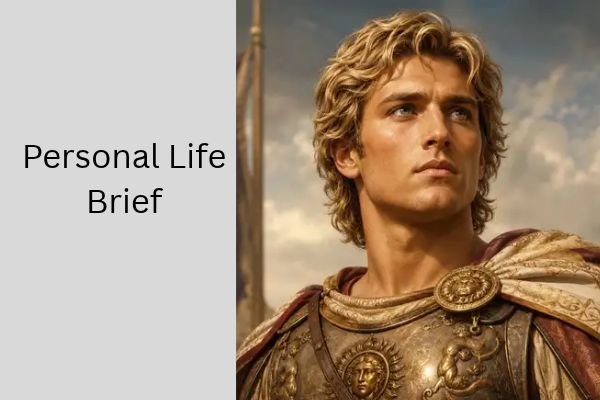
Alexander married Roxana, daughter of a Bactrian nobleman, around 327 BC. At Susa in 324 BC, he married Stateira, the daughter of Darius III, and Parysatis, a daughter of Artaxerxes III. Roxana was pregnant when Alexander died, and she gave birth to his son, Alexander IV, who was later murdered along with his mother during the wars of the successors. Barsine, a Persian noblewoman, is said to have borne him another son, Heracles, though the evidence is thin.
His closest bond was with Hephaestion, whose death in Ecbatana in 324 BC devastated him. Alexander ordered a lavish funeral and mourned publicly. His mother, Olympias, remained influential and corresponded with him throughout his campaigns. Alexander died in Babylon in June 323 BC, and his body was eventually taken to Egypt. The location of his tomb in Alexandria is still unknown.
Frequently Asked Questions
Was Alexander the Great tall for a man?
No. At about 5 ft 6 in (168 cm), he was roughly average or slightly below average for men of his time and region.
What is the Alexander the Great height in cm?
The most commonly cited estimate is about 168 cm. Scholars generally allow a range of roughly 163 to 170 cm, since no skeleton or exact measurement survives.
How does Alexander’s height compare to Napoleon’s?
They were nearly the same. Napoleon is usually listed at about 5 ft 6 in to 5 ft 7 in (168-170 cm), so the two conquerors were within an inch of each other.
Did Alexander ever talk about his height?
No statement on the subject survives. The closest account is the story of Sisygambis mistaking Hephaestion for him.
What was Alexander’s shoe size?
It is unknown. Alexander wore Greek-style sandals and boots, and no footwear belonging to him survives.
Was Alexander taller than Julius Caesar?
No. Caesar is estimated at about 5 ft 9 in (175 cm), several inches taller than Alexander.
Who was taller, Alexander or Hephaestion?
Hephaestion. Ancient writers say he was taller and better looking, and the Persian royal family mistook him for the king.
Did his height affect him as a warrior?
Not in any recorded way. He was agile, fast, and strong, and he fought in the front line of cavalry charges. His smaller size may even have helped him as a horseman.
What is Alexander known for besides his height?
He is known for conquering the Persian Empire by age 25, never losing a major battle, founding Alexandria, and spreading Greek culture across the Mediterranean and Asia.
Why do people think Alexander was short?
A few later descriptions call him small in stature. Contrast with taller companions and with Persian royals such as Darius III also fed the impression, and modern estimates are only approximate.
