
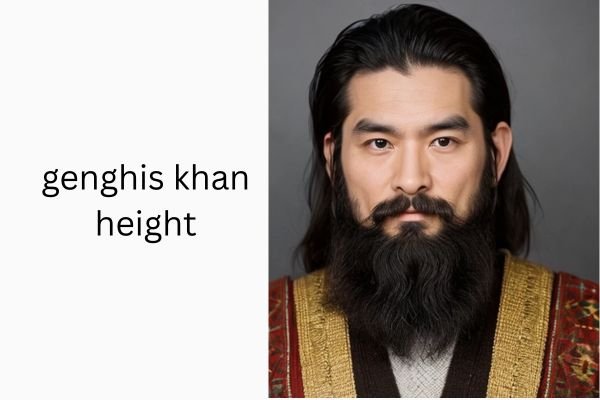
Genghis Khan height cannot be verified with an exact figure — no contemporary measurement, portrait, or skeletal remains have ever been confirmed. Based on surviving historical descriptions and the average stature of 13th-century Mongolian men, historians estimate he stood somewhere between 5 feet 6 inches and 5 feet 9 inches (168–175 cm), likely average to slightly above average for his era.
Quick Facts Table
| Attribute | Detail |
|---|---|
| Full Name | Temüjin (later titled Genghis Khan / Chinggis Khan) |
| Estimated Height | 5’6″–5’9″ (168–175 cm), unverified |
| Weight | Unknown — no reliable historical record |
| Date of Birth | Disputed, estimated c. 1162 |
| Died | August 1227 (age approx. 65) |
| Birthplace | Near the Onon River, present-day Khentii Province, Mongolia |
| Nationality | Mongol |
| Profession | Founder and first Great Khan of the Mongol Empire |
| Shoe Size | No historical record exists |
| Burial Site | Unknown; deliberately concealed per Mongol custom |
Early Life & Background
Temüjin, who would later take the title Genghis Khan, was born into the Borjigin clan on the Mongolian steppe, likely around 1162, though the exact year is disputed among historians. His father, a minor tribal chief, was poisoned by rival Tatars when Temüjin was still a boy, leaving his family impoverished and abandoned by their own clan. This early hardship — marked by hunger, exile, and even a period of captivity and enslavement by a rival tribe — shaped the ruthless pragmatism and survival instincts that would define his later rise.
By his teenage years, Temüjin had begun rebuilding alliances through marriage and calculated loyalty, eventually forming a blood-brother pact with Jamukha, a childhood friend who later became his greatest rival. The Secret History of the Mongols, the primary source for this period, describes Temüjin as physically strong and of “medium height, with a strong back and wide chest,” though the text was compiled decades after his death and blends history with legend.
Career Journey / Timeline
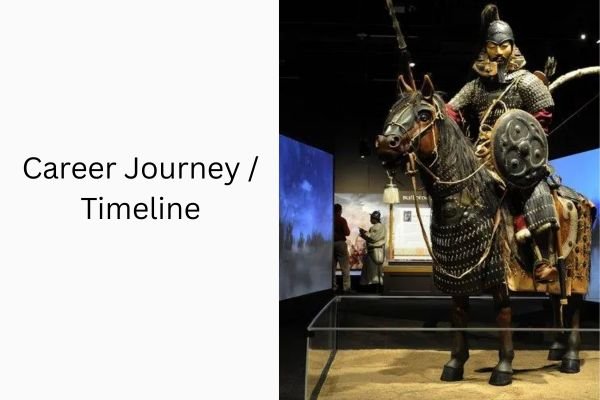
c. 1178–1185: Temüjin begins consolidating power among fractured steppe clans, forming key alliances, including with Toghrul, khan of the powerful Kerait tribe, who becomes an early patron.
1201–1204: Temüjin defeats a series of rival confederations, including the Tatars and the Naimans, eliminating the major powers that had historically dominated the Mongolian plateau.
1206: At a kurultai (a great assembly of Mongol chieftains), Temüjin is proclaimed Genghis Khan — “universal ruler” — unifying the previously warring Mongol and Turkic tribes into a single nation for the first time.
1207–1210: He launches campaigns against the Western Xia dynasty in northwestern China, forcing their submission and securing his southern flank.
1211–1215: The Mongols invade the Jin dynasty in northern China, eventually capturing the capital Zhongdu (near modern Beijing) in 1215, a campaign that introduces the Mongols to siege warfare and administrative techniques they later use empire-wide.
1218–1221: After the execution of Mongol envoys, Genghis Khan turns west and devastates the Khwarazmian Empire across Central Asia and Persia, destroying cities including Samarkand, Bukhara, and Urgench — a campaign historians regard as one of the deadliest in pre-modern history.
1226–1227: Genghis Khan launches a final campaign against the Western Xia, who had refused to send troops for the Khwarazmian invasion. He dies in August 1227, during or shortly after this campaign; the exact cause of death remains debated, with theories ranging from illness to injury from a fall.
Legacy: At the time of his death, the Mongol Empire stretched from the Caspian Sea to the Sea of Japan. His successors, particularly his son Ögedei and grandson Kublai Khan, expanded it further into the largest contiguous land empire in history.
Physical Appearance in Detail
No contemporary portraits or sculptures of Genghis Khan survive, and later depictions — including the famous 14th-century Yuan-dynasty portrait — were painted decades or centuries after his death, based on secondhand description rather than direct observation. What’s known comes from a handful of textual sources.
The Persian historian Juvayni, writing in the 13th century, described him as a man of imposing stature and strength, though without giving specific measurements. Rashid al-Din, another Persian chronicler, similarly noted he was taller than most of his contemporaries. Zhao Hong, a Song-dynasty Chinese diplomat who personally visited the Mongol court in 1221, offers one of the more detailed accounts, describing Genghis Khan as tall and robust with a broad forehead and a long beard.
The Secret History of the Mongols, compiled by his own court, describes a strong back and wide chest rather than unusual height. Taken together, the sources paint a picture of a physically powerful, broad-framed man whose “larger than life” reputation was likely as much about presence and authority as raw stature.
Genghis Khan Height Compared to Other Historical Leaders
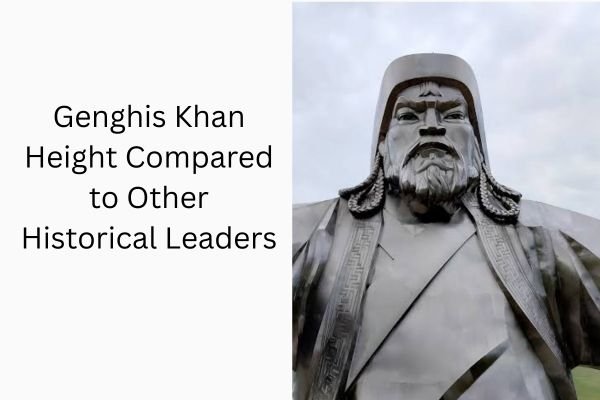
Because no verified figure exists for Genghis Khan, direct comparisons are necessarily approximate — but placing him alongside other historical conquerors, whose heights are similarly estimated from indirect evidence, gives useful context.
| Leader | Estimated Height | Era |
|---|---|---|
| Genghis Khan | 5’6″–5’9″ (168–175 cm) | 13th century |
| Alexander the Great | ~5’6″ (168 cm) | 4th century BCE |
| Julius Caesar | ~5’7″ (170 cm) | 1st century BCE |
| Napoleon Bonaparte | ~5’6″–5’7″ (168–170 cm) | 18th–19th century |
| Attila the Hun | Unknown; no reliable estimate exists | 5th century |
| Kublai Khan (grandson) | Described as of “middling stature” in period sources | 13th century |
Genghis Khan height, based on the best available evidence, places him squarely in line with several other legendary conquerors whose historical reputations for physical dominance outpaced their actual recorded (or estimated) stature.
How Height Shaped His Public Image
Genghis Khan’s legend has long been tied to an image of overwhelming physical size, but the historical record suggests his dominance came from strategy, discipline, and psychological warfare rather than sheer height. He built an empire through superior cavalry tactics, meritocratic promotion within his army regardless of clan origin, and a reputation for both brutal retaliation against resistance and generous terms for cities that surrendered peacefully — a combination that made his forces feared long before they arrived.
The perception of him as a towering giant likely grew retroactively, as later chroniclers and artists sought to match his physical description to the scale of his conquests. This is a common pattern in how history remembers dominant leaders: physical stature and power become conflated in cultural memory, even when the actual evidence points to an average-to-above-average build rather than anything extraordinary.
Genghis Khan height, in other words, tells a smaller story than his reputation suggests — and that gap is itself revealing about how legends are built. His actual advantages were logistical and tactical: horsemanship, discipline, and an empire-wide communication network (the yam relay system) that let him coordinate forces across thousands of miles, none of which required unusual height to achieve.
What Historical Sources Have Said About His Appearance
No direct quotations from Genghis Khan himself about his own height survive — he left no personal writings, and the Secret History of the Mongols, compiled after his death, focuses on his deeds rather than physical self-description. What exists instead are secondhand characterizations from contemporaries and near-contemporaries.
Zhao Hong’s 1221 account, written after meeting Mongol court officials, is among the most cited: he described Genghis Khan as tall, with a commanding presence, a broad forehead, and a long beard. Persian chroniclers Juvayni and Rashid al-Din, writing within a few decades of his death, both emphasized his imposing bearing without giving concrete figures.
Modern historians generally treat all of these accounts with caution, since flattering or awe-struck descriptions of a conquering ruler were a common literary convention of the period, regardless of the subject’s actual build.
Personal Life Brief
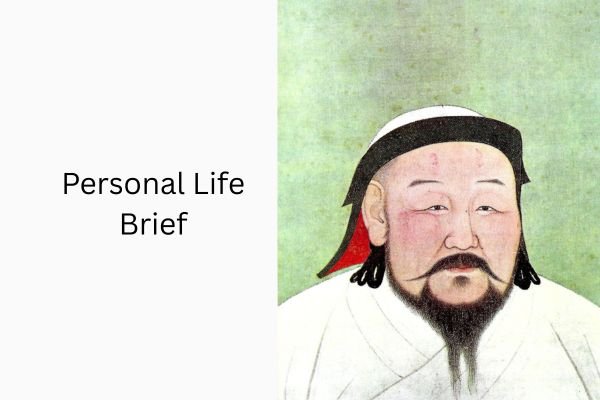
Genghis Khan married his first and chief wife, Börte, in his teens, and she remained his primary consort and the mother of his four recognized sons — Jochi, Chagatai, Ögedei, and Tolui — all of whom played major roles in the empire’s later expansion. He took numerous other wives and consorts as his power grew, a common practice among steppe rulers used to cement political alliances.
His family life was also marked by conflict, particularly ongoing tension over Jochi’s paternity, since Börte had been kidnapped and held by a rival tribe shortly after their marriage. Genghis Khan’s chosen successor was his third son, Ögedei, who was formally confirmed as Great Khan in 1229, two years after his father’s death, continuing the imperial expansion into Russia, Persia, and China.
FAQ Section
Is Genghis Khan’s height actually known for certain?
No. There is no verified measurement, portrait from life, or confirmed skeletal remains. Every figure cited is an estimate drawn from secondhand historical descriptions.
What is the most commonly cited estimate for Genghis Khan’s height in cm?
Most sources estimate 168 to 175 cm (5’6″ to 5’9″), based on average Mongolian male height in the 13th century plus descriptions calling him taller than most of his contemporaries.
How does Genghis Khan’s height compare to Kublai Khan’s?
Kublai Khan, his grandson, is described in period sources as of “middling stature,” suggesting a similar or comparable build, though this too lacks precise measurement.
Did Genghis Khan himself ever comment on his height?
No firsthand quotes from him about his own physical stature survive in any known historical source.
Is there a record of Genghis Khan’s shoe size?
No. No footwear, physical remains, or detailed clothing measurements from his lifetime have been confirmed to exist.
Was Genghis Khan taller than Napoleon?
Their estimated heights are close — roughly 5’6″–5’9″ for Genghis Khan versus about 5’6″–5’7″ for Napoleon — though neither figure is precise enough to declare a clear winner.
Did his height affect his effectiveness as a military leader?
Historians generally attribute his success to tactics, cavalry mobility, and organizational innovation rather than physical stature, which appears to have been unremarkable for his era.
Why is Genghis Khan often imagined as physically massive?
His reputation as a fearsome, larger-than-life conqueror likely influenced later portraits and descriptions, a common pattern where a leader’s power becomes conflated with physical size in cultural memory.
What is Genghis Khan best known for besides his physical description?
He is best known for unifying the Mongol tribes in 1206 and founding the largest contiguous land empire in history, along with introducing meritocratic military promotion and the yam postal relay system.
Where is Genghis Khan buried?
His burial site was deliberately kept secret according to Mongol tradition and has never been definitively located, despite numerous archaeological expeditions.
